Meg’s Adventure Roundup Part 3: Krabi
- Apr 2
- 11 min read
Updated: Apr 19
The night bus seems like a great idea at the start: cheap ticket, travel while you sleep, and you don’t have to pay for a hostel. In theory, it’s the budget backpacker’s dream.
In practice, Thai buses make frequent, squeaky stops and aren’t afraid to take the pothole paths all through the night. I also had a seatmate who wasn’t afraid to watch game show reruns on his phone with the volume on full. This week’s blog is brought to you by noise-canceling headphones and kind friends who made me playlists to drown out the Asian game shows.
When we pulled into Krabi's terminal at 7 the next morning, all I wanted to do was fall face down on a beach and take a long nap. Luckily for me, we’re in Krabi now, and that’s the ideal itinerary.
Welcome to Krabi
The word of the week is cumulative.
After spending a few weeks in a country, you start to piece together its patterns. Every traveler leaves with a unique cultural mosaic built from thousands of small moments, as personal and unreplicable as a fingerprint.
The first rule of World Travel 101 is that you should never use these patterns to say, "Everyone in Thailand..." However, I feel ready to say with full confidence that everyone in Thailand loves the song "Wonderful Tonight" by Eric Clapton. They simply must; there is no other explanation for why it wafts from every bar and open-mic night across the country. I have heard it acoustic-style, Bali-style, reggae-style, and in English, Thai, Mandarin, and French. There is no "Layla." There is no "Lay Down, Sally." There is only "Wonderful Tonight."
More importantly than Clapton culture, I'm starting to notice the cumulative effects of solo travel in myself. I'm more comfortable with uncertainty, more confident in my own abilities, more decisive, and less afraid to stand up for myself. I'm learning self-advocacy is one of the greatest survival skills a solo female traveler can wield, and each day brings opportunities to practice.
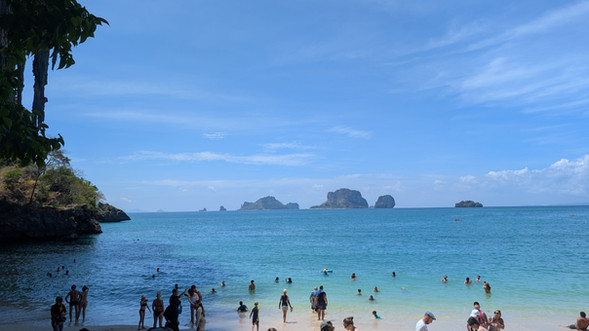
But in all honesty, I didn't go to Krabi for more personal growth. I went for the island experience, to be just another sunscreen slatherer on a towel. I did my best to have the full Krabi experience without draining my smoothie budget too much: I swam in the ocean, climbed limestone cliffs, kayaked through mangroves, fought a cheeky monkey, and got my first proper offer to move to Israel to marry someone’s tall, handsome cousin and live like a princess. What more could you ask from one trip?
I decided this wasn't the place to go looking for any major revelations, but I didn't walk away empty-handed. Like most of my time in Thailand, my trip to Krabi was an accumulation of small moments with one landmark exception: it's where I made my first real travel blunder.

Kayaking with the Krabi Krew
One decision that can make or break your time in any city is choosing where to stay. I chose Ao Nang, a beach town made entirely of tourists, resorts, smoothie stands, and 7-Elevens. We travelers have pushed the locals 30 minutes inland and claimed the beachfront as our own. Motorboats carry us from island to island while we feast on barbecue chicken buffets and watch sunset fire shows in the sand, gorging on our fill of natural and manufactured paradise.
After choosing the town comes the hardest part, choosing a hostel. Hostels can generally be divided into three categories: quiet, social, and party. I usually book hostels on the quiet side, but this time I decided to book something a little more social for a weekend on the beach. I found a hostel whose reviews raved about a friendly staff and group excursions. The facilities looked more like summer camp than I was used to. (Think outdoor toilets and showers with curtains that blow open every time they catch the island breeze. I showered with one hand on the soap, one hand on the curtain.) Still, I figured curtain toilets were a small price to pay for some built-in hiking buddies.
When I arrived, the hostel was a bit more social than advertised. Turns out, I had accidentally booked one of the biggest party hostels in Krabi.
I won’t elaborate much more on the details, but I quickly learned that travelers book this hostel for one reason, and it isn’t cultural exploration or hiking buddies. I called these travelers the Krabi Krew, and I was the designated grandma of the pack. If Chiang Mai and Bangkok were lessons in adaptability, Krabi was my final exam before I could leave the country.
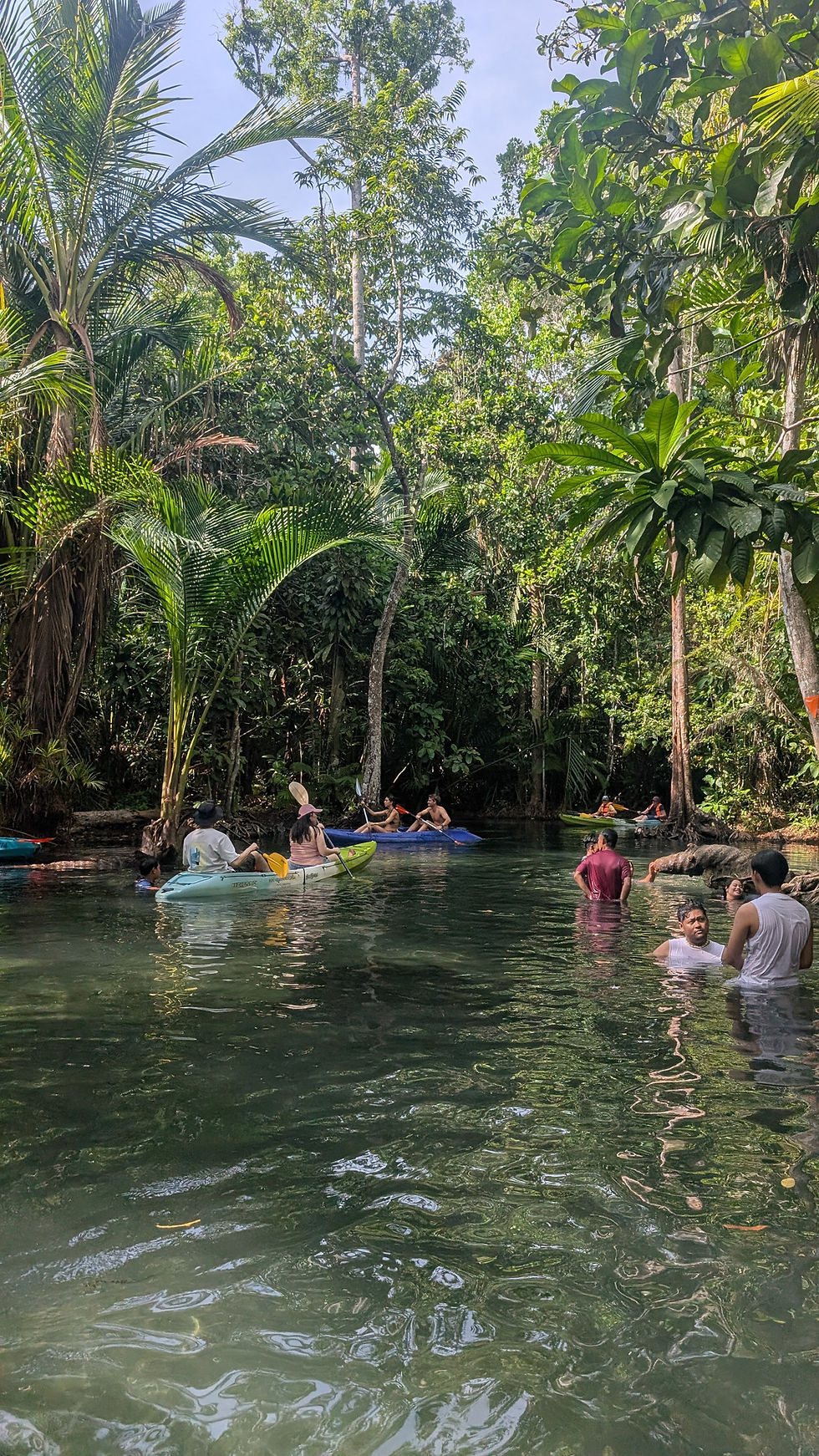
My time at Camp Krabi Krew came with one silver lining: I got a great discount for an afternoon kayaking trip through Krabi’s mangroves.
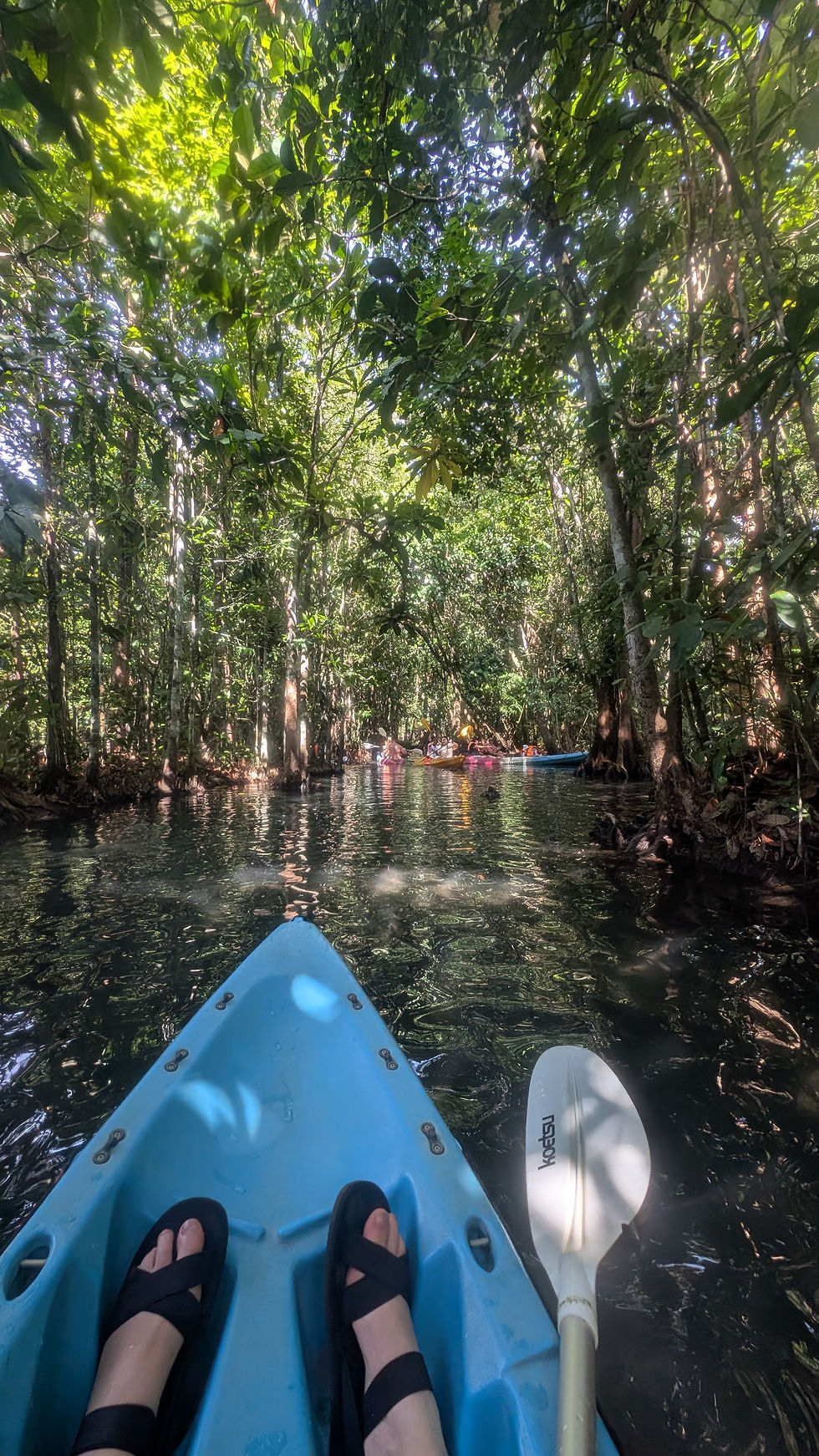
The views were spectacular, but the best part of the journey was a surprise connection with my paddling partner, a working mother of three from Israel named Ido.
Ido and I spent three hours in a double kayak navigating rocks and tree roots in shallow waters, comparing work and parenting cultures between our two countries. Every year, Ido takes two consecutive weeks of vacation away from her job and family to travel, recharge, and meet up with girlfriends around the world without a child or email in sight.
I decided I want to be Ido when I grow up. Or maybe I just want her country's labor laws.
For many travelers I’m meeting, including Ido, two consecutive weeks off from work is common practice. Their governments often encourage — sometimes even require — employees to take consecutive weeks each year to recover from burnout and return to their jobs fully refreshed.
When you dive into the policy side, most countries comparable to the U.S. require 20–30 days of paid time off every year for all employees. In Israel, newer employees start with about 2 weeks of mandated PTO, and it increases with experience.
I asked Ido what the preparation and approval process looked like for her company.
"You just ask for it," she said. "And it's approved." No stress, no overtime, no "I'll be checking Slack while I'm out just in case." She was truly unplugged.
I thought of my friends and family in America. Two consecutive weeks from work is unheard of for many of us. When it is possible, it usually means working overtime to prepare or volunteering to check your email while you’re away to make sure the projects keep rolling. We travel with a constant tether to our jobs.
It's why we're called the "No-vacation Nation," the only country in our global league with no guaranteed vacation, sick days, or holiday time for employees. Even when employees are offered PTO, we're less likely to actually take it. You can argue it’s in the name of greater productivity or being a team player for the company, but it all hearkens back to something a French supervisor told me in college that sticks with me to this day:
“Americans live to work. We work to live.“
It’s the kind of conversation that makes you question if you want to go back home to work in America after all.
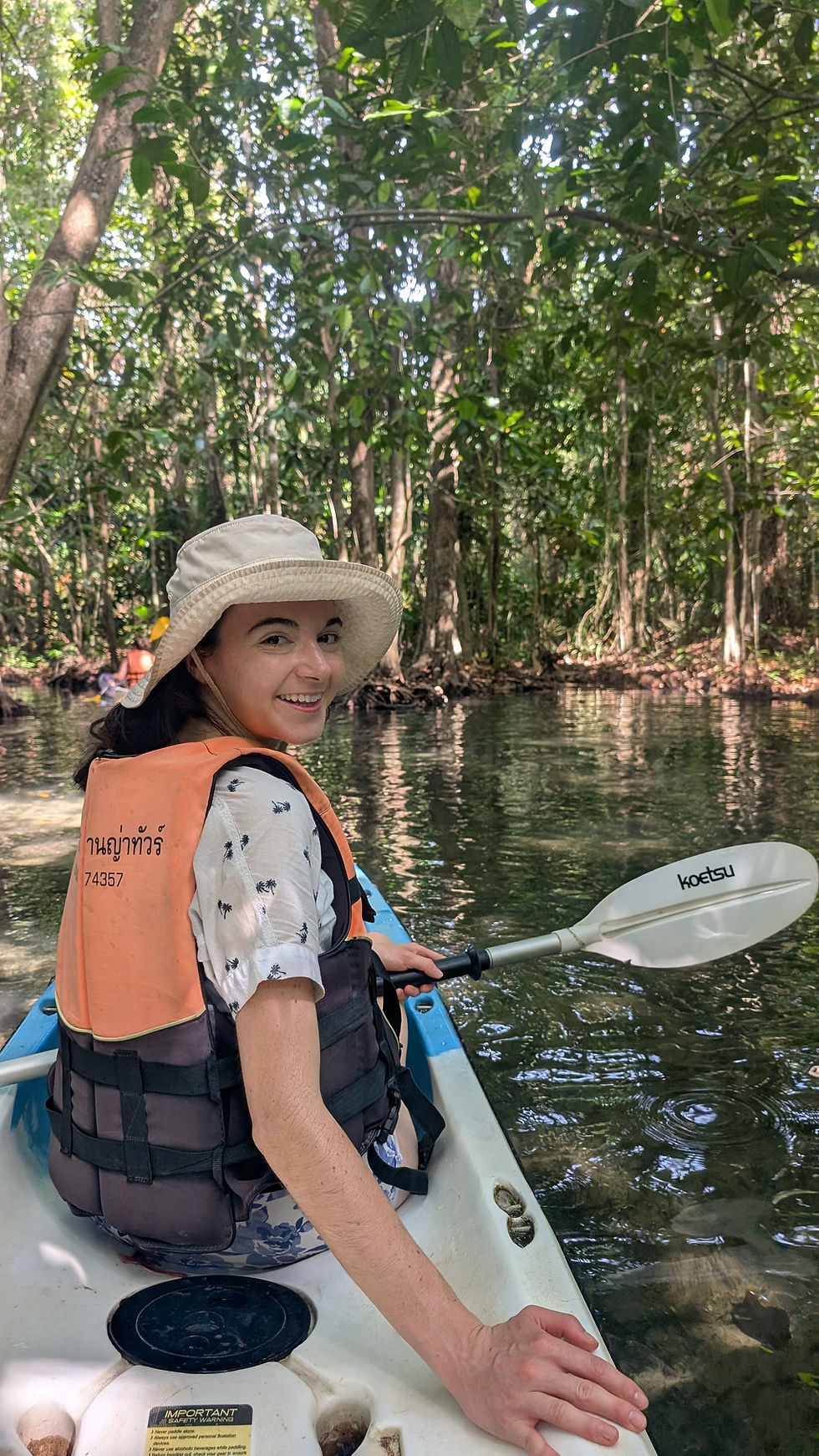
What made Ido's story especially inspiring for me is that she broke the mold of the solo female traveler I was expecting to find. She's not a single explorer wandering cities while eating bananas and having an identity crisis; she is a married mother of three who is confident in who she is and who closely tends her relationship with herself.
One reason I took this journey was because I knew that once I grew any roots — got married, bought a house, had kids, or even adopted a cat — the window to explore the world and learn about myself with this level of autonomy would be closed. But for Ido, getting married and having a family didn’t end her adventures or ambitions; they just changed how she balanced them. I tried to think of any mother or wife I know in the states who could leave her family for two weeks to rock a string bikini in Krabi and drink mai tais on the beach with her girlfriends. Even without the Thai vacation, what parents could step away to focus on themselves for weeks at a time? It's a privilege in any culture, but it feels unheard of — maybe even a little bit shameful — to try at home.
Most moms I know live in a constant state of burnout, trying to "do it all" and meet the needs of everyone around them while consistently placing their own needs last. This culture of motherly martyrdom has made the desire to be a mom a deep uncertainty in my life. It seems that to be a mom in America is to sacrifice your own identity and inextricably tie it to your family's. When I ask a mom how she's doing, I usually get a full update on her family without answering the actual question: "How are you?"
It's what we do when we love others; we build our lives around them. I've been thinking a lot about that recently. I spent four years in a partnership that had nowhere near the commitment of a marriage; even so, I didn’t realize how much I had molded my identity around someone else until I was on my own and began to fall back in love with dormant corners of myself. I can't help but imagine how much more my career, health, needs, and identity could be at stake as an actual wife or mother. Many days, I believe I'm too selfish for the roles.
To live a life bigger than myself will always require a level of sacrifice, but speaking with Ido was a small revelation that building a life around others doesn’t have to end in a funeral for my own ambitions. Ido is an involved mother and wife who sets boundaries for her own hobbies, her own friends, and her own adventures. She prioritizes strengthening her relationship with herself and safeguards her identity as precious. And, based on our conversation, there is no shame in this in her community. She is not considered selfish or a lesser mother; her community has established a norm where parents set boundaries and share the load to make them possible. Imagine if we embraced a similar structure to support our struggling mothers at home.
I’m continuing to think about what I really want from the future. (Master's degree? Partner? Kids? Start with a goldfish and see how it goes?) Meeting people like Ido is helping me reimagine what a career, partnership, and family built with intention could look like — it doesn't have to fit the patterns I've seen. Regardless of what happens from here, I plan to keep building my life with thoughtfulness and intention, even if it's just with a goldfish.
It's worth noting that family-first policies (like universal health care, subsidized childcare, free college tuition, months of maternity leave, mandated PTO, and more) play a huge role in making lifestyles like Ido's possible. From my perspective, these are policies worth fighting for in the U.S.
But I'm not on this kayak for personal growth. I'm here for the island experience, and I still intend to have it to the fullest.
The Island Experience
Every time you walk down the sidewalk, your attention becomes the hottest commodity in Krabi. Men stand outside of restaurants and bars flashing menus, rattling happy hour specials, and pushing you towards a table. Shacks selling smoothies, coconuts, rotis, fruits, t-shirts, and tours grow like weeds between the storefronts, each worker calling for you to come try what they have to offer. It’s a specific type of commotion that makes you feel suffocated by people and all alone at the same time.
I looked for ways to escape the commotion in nature. Long hikes, beach walks, ocean swims, and rock climbs are good for the soul and great for the budget. My favorite discovery was a rock climb on Railay Beach. While you can pay to put on a helmet and strap yourself to a cliff beside the beach, the budget said no, and she has ultimate veto power over this whole operation.
Instead, I found a free hike that turned out to be more of a climb. The trail comes with a rope and a warning sign that only the physically fit should attempt this. The rocks and rope are covered in a slippery orange soil. By the end of the hike, everything on you is orange to match.
But the payoff of a dirty rock climb is the most privacy and best view you can get on one of the most touristy islands in Thailand.


Most travelers turn around here, but if you’re willing to sacrifice your favorite white t-shirt to the orange soil, you can take on vertical drops and jump through a hole to reach a hidden lagoon.





The few times I’ve been bouldering in Austin really came in handy here. This was a real-life Crux Climbing Center, except there was no cushioned mat if I fell, and the trail difficulty wasn't marked by animal shapes.
Through some careful stepping and shimmying, I made it to the bottom and met two Canadian hikers about my age. Their goal when they travel is to hike one leg farther than everyone else to find views that make them feel like they have the world to themselves.
And that’s really how it felt down there. Above us, thousands of people were sardining beach towels next to each other and fighting for space on the sand for photos. We had found a pocket away from them all, echoing our voices across the concave rocks around the lagoon.


And as it turns out, I learned I love bouldering hikes even more than regular ones. I don't have the upper arm strength to match my enthusiasm yet, but we'll get there.
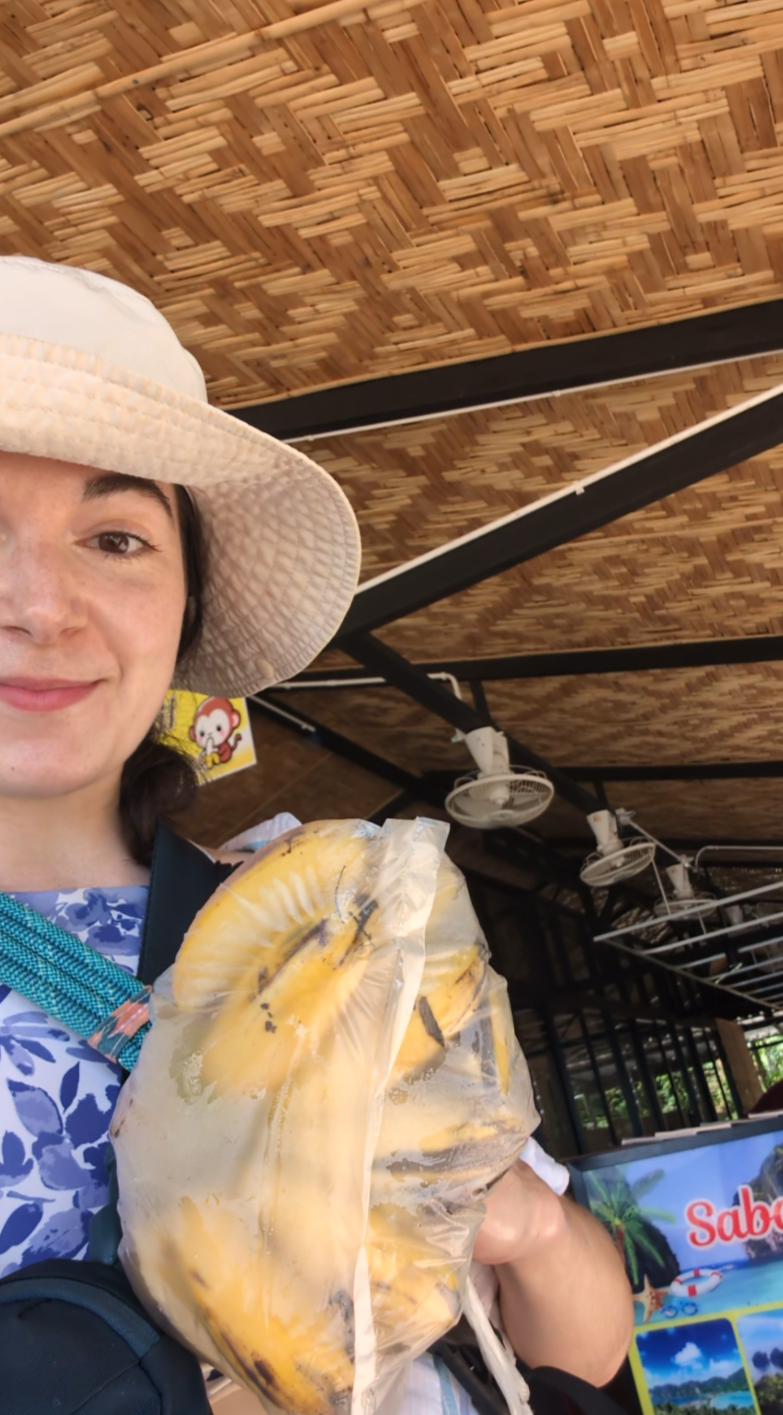
To round out my time on the islands, I read, swam, strolled, made banana and peanut butter sandwiches (the breakfast of backpacker champions), and even braved Monkey Trail.




These monkeys are known for being cute the first 5 minutes you see them and a menace for the rest of your stay. They’re a sneaky gang of thieves who have planned their next heist: while you’re watching one monkey, another will jump on your back, break into your bag, and steal anything that may look like a treat. I’ve seen monkeys steal mangoes, chewing gum, milk, 7-Eleven sodas, and every styrofoam takeout container they can get their paws on.

Krabi gave me more moments than I expected for my Thailand mosaic: a top-of-the-world rock climb. A bus ride with a Canadian couple who compared healthcare systems. Befriending two bunk mates from the Krabi Krew — they drank in the hostel until the money ran out and fled to Vietnam, chasing cheaper drinks and accommodations. Dinner next to a table of Israeli dads who asked, “Why aren’t you married yet?” One called his cousin on the spot who was 30 and unmarried in Israel.
“He’s tall, rich, handsome.” The trifecta. “You come to Israel, you visit me. It’s expensive, but we’ll take care of you. And the food — oh, the food! Come to Israel!”
Come to Israel! rang through my head as I walked along the shore that night. I would love to come to Israel, I thought. But not to marry a cousin. On my own terms, Ido-style. Maybe I’ll bring my goldfish.
As I walked in half-lit darkness, I heard the strum of an acoustic guitar from a nearby bar that could only mean one thing: “And then she asks me, 'Do I look all right?' And I say, 'Yes, you look —”
It's time to go.
While I'm sad to say goodbye to Thailand, we still have 10 hours on a bus together until I reach my next destination: Georgetown, Malaysia. I hadn't heard of Georgetown before this trip, but travelers all over Thailand have made the same claim about it that I have to test for myself — Georgetown has the best food scene in Asia.
We are officially in the territory of no itinerary and no expectations, but I have a feeling some good moments and good meals are ahead.
Love,
Megan






Comments