Life of a Singapore Cheapskate
- Jun 14
- 8 min read
It’s midnight. I’m on the bottom of a bunk bed made of plastic pods, and I’ve never been more afraid. There is a man sleeping above me who I wouldn’t call overweight, but I would call “too big for the top bunk in a plastic bunk bed.” Every time he moves, the plastic groans.
We sway like a card tower about to collapse, and I start to think this is how I’ll go — squashed in the night by a middle-aged man in a bunk bed. I tell myself there are worse ways to die, but I have to admit, this one feels pretty up there.
However, I had no choice but to book the shaking plastic bunk bed this week. My sole mission is to stay in budget in what I’ve heard is one of the most expensive cities in Southeast Asia. It’s a showdown between the “Crazy Rich Asians” country and a backpacker who takes toilet paper from hostels because she’s still too cheap to buy real tissues.
Welcome to Singapore.
Singapore vs. Mango
The word of the week is maximize.
I didn’t realize just how small Singapore is. It’s an island, city, and country all in one (island city-state is the official term). In terms of land, it’s even smaller than Austin, Texas.
It would take over 940 Singapores to cover the state of Texas.
Most travelers I’ve met say you don’t need more than 2 or 3 days in Singapore to have “the Experience.” If you only stop for the weekend, you’ll see some of the most incredible infrastructure in the world and have a great time at the zoo, but you might miss what makes Singapore stand in a league of its own.
I spent 5 days in Singapore, which was just enough to glimpse how the city maximizes every square inch of space it has. They don’t just have a zoo; they have one of the most efficient and well-designed zoos in the world. They don’t just have a botanical garden; they have one of the most exquisite gardens and orchid displays on the globe. The only thing missing was an upright piano where I could play Yiruma to the orchid seedlings. Oh wait, hold that thought —
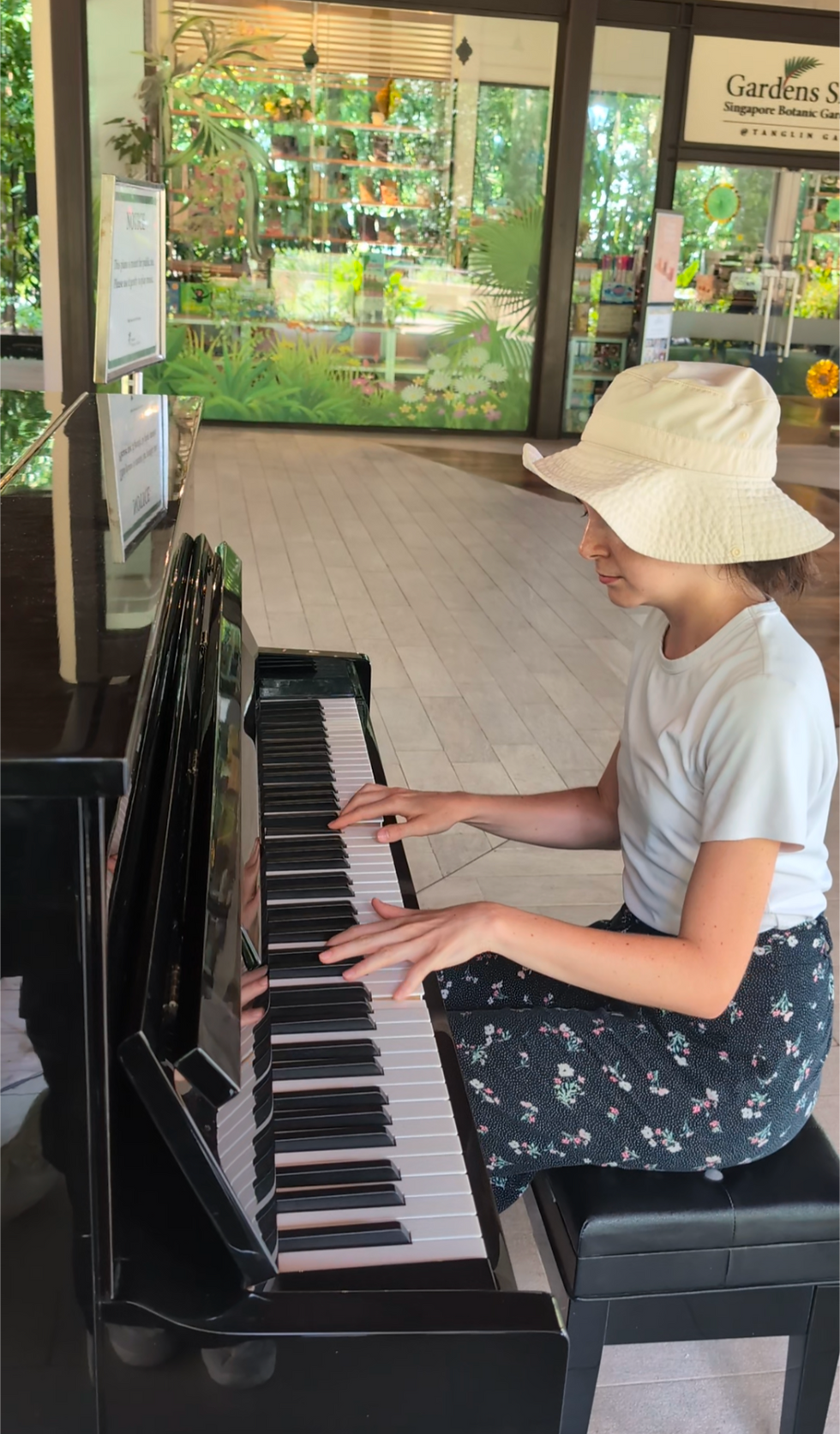
Never mind, they thought of everything.
And they don’t just have neighborhoods; they have hubs of well-connected malls, apartments, trains, trails, pharmacies, and community centers at their residents' fingertips. Walking through Singapore feels like walking through a city constantly building and rebuilding, stretching towards utopia.
Singapore is the perfect case study on how to maximize resources, a lesson my bank account always needs to learn. This week is brought to you by lessons 1 and 2: window shopping and street cart noodles.
The Budget Breakdown
Singapore is a place where you can still have a lot of fun if you have no money — you can just have a lot more fun if you do.
When I call Singapore expensive, I mean “Southeast Asia expensive.” A food cart meal here is around $5–$10. This might not sound like a lot in the States, but in Malaysia, it was $4. An extra few dollars for everything really adds up as the days go by.
Still, despite how expensive the city can be, the government prioritizes creating spaces that are free and available for all to enjoy, like the nightly lights show at the Supertree Grove.

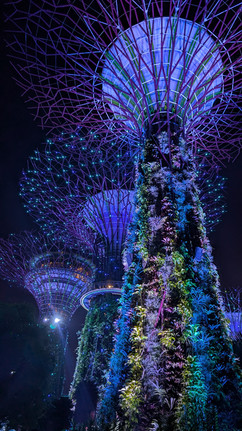

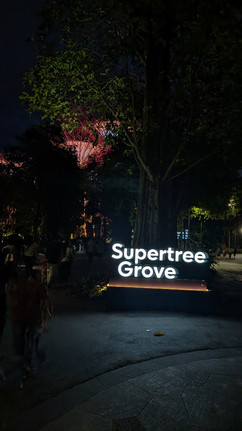

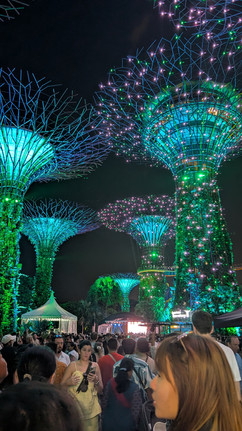
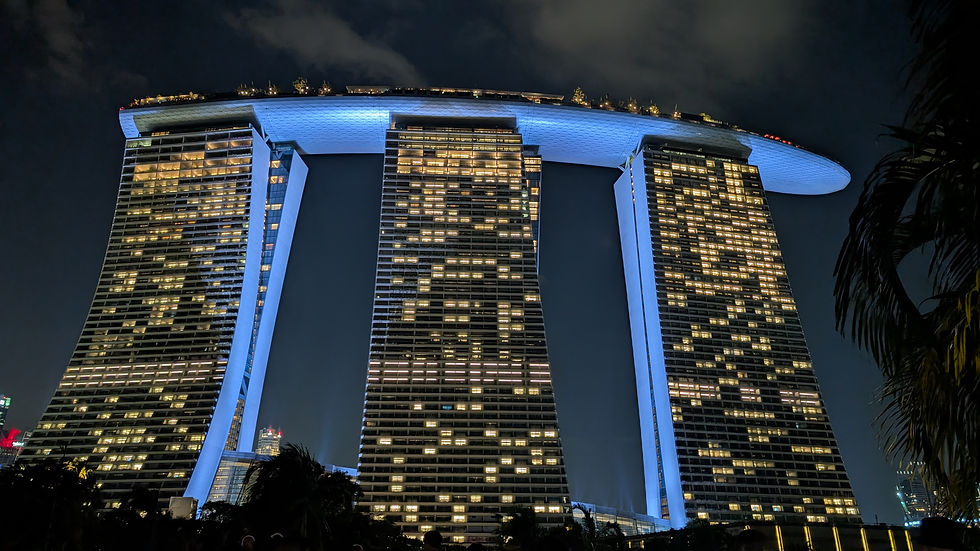
I had to make some tough calls in the name of savings — I skipped the zoo, the theme parks, and Cloud Forest biodome. But even if I couldn't buy a drink at the Marina Bay Sands rooftop bar (or as I knew it until now, “the Crazy Rich Asians building”), there was no shortage of sights to make me say "wow."
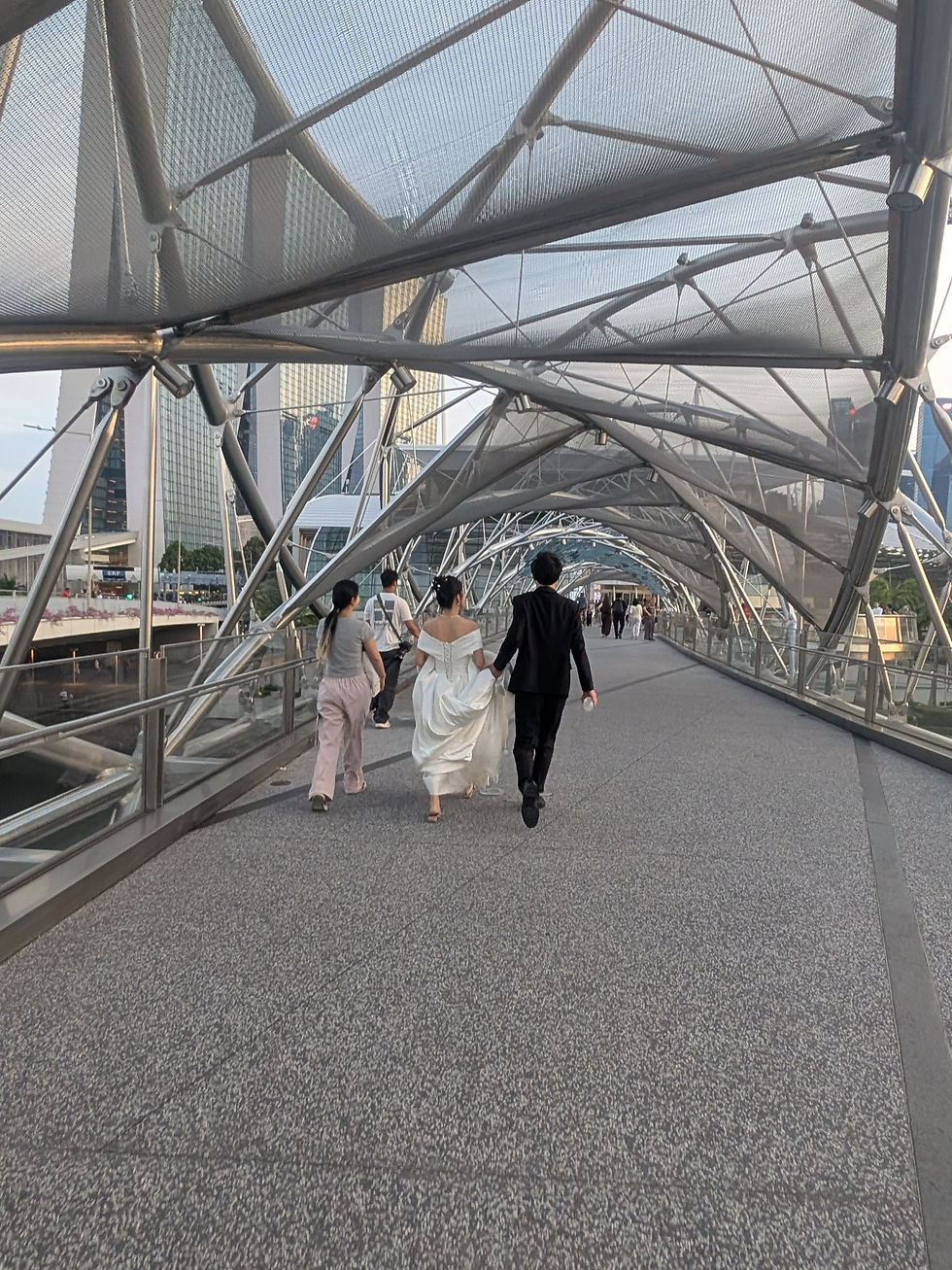
The ultimate tourist dream in Singapore is to live scenes from Crazy Rich Asians. I had the backpacker’s version: I followed a bride and groom down the street, watched Mahjong, heard an acoustic version of “Yellow” in a mall courtyard, and saw a lot of things I couldn't afford. That's basically the full movie.
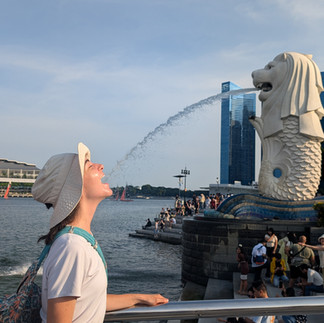
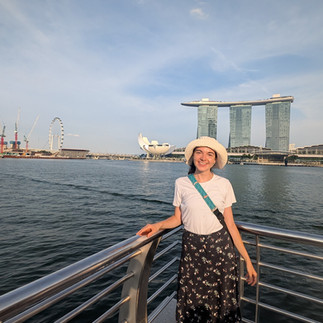
But no matter how much we spent on the day, we all joined together under the Supertree Grove canopies to watch the free light show at night. We all took a photo with the same Merlion statue. We enjoyed the same skyline. And we all trekked to Marina Bay Sands to stroll through the luxury mall and either shop or pretend like we belonged there.




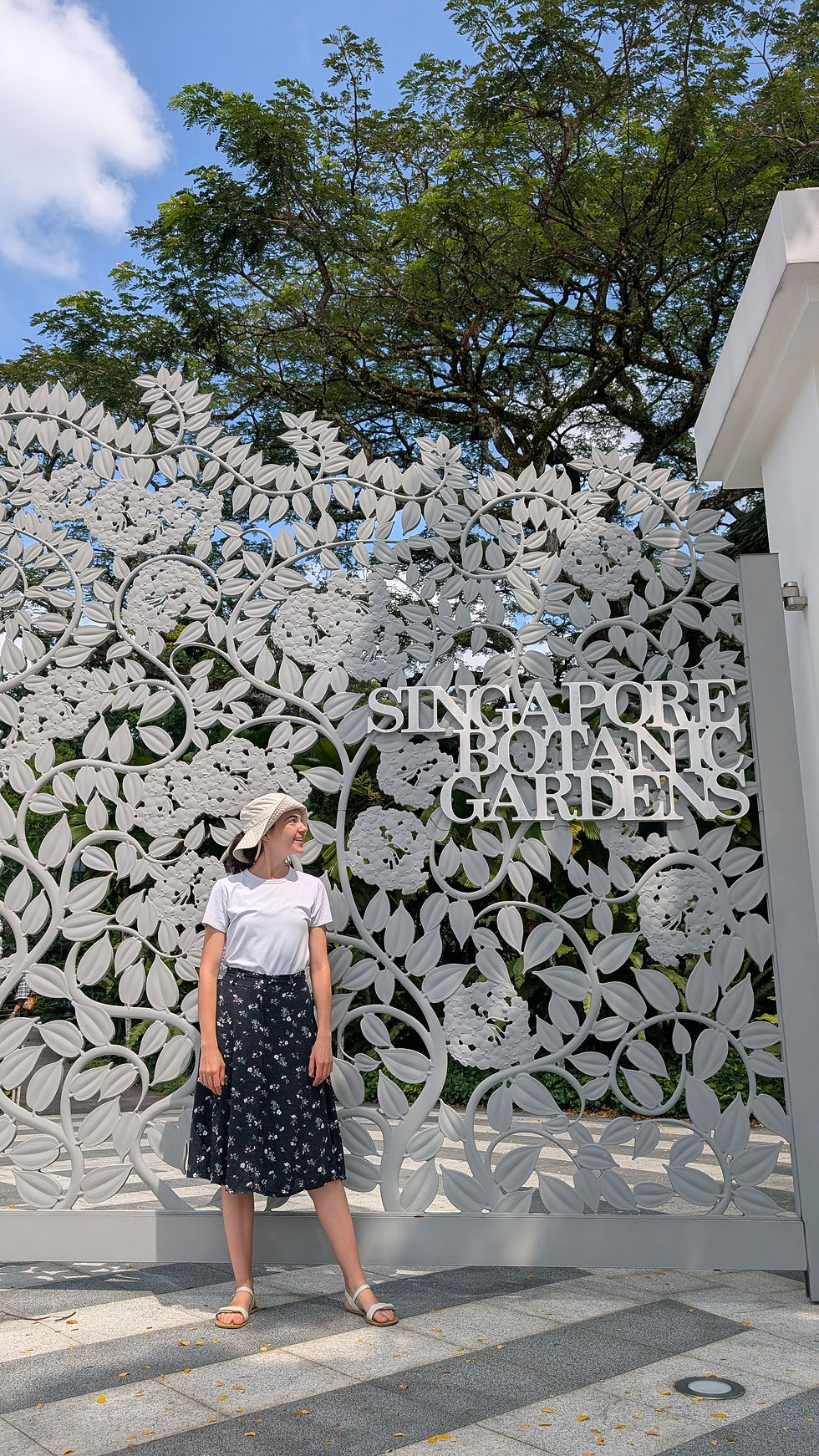

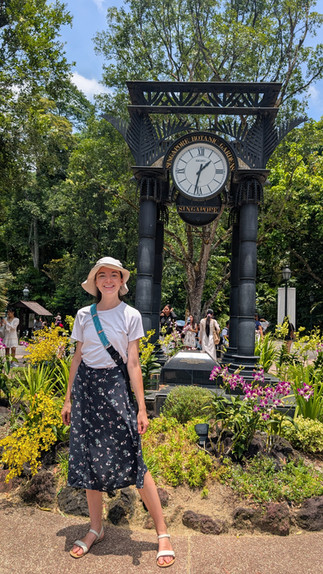

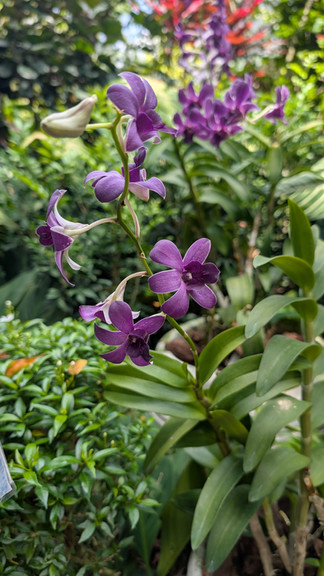






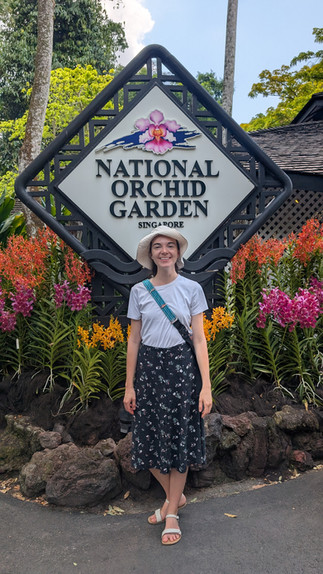
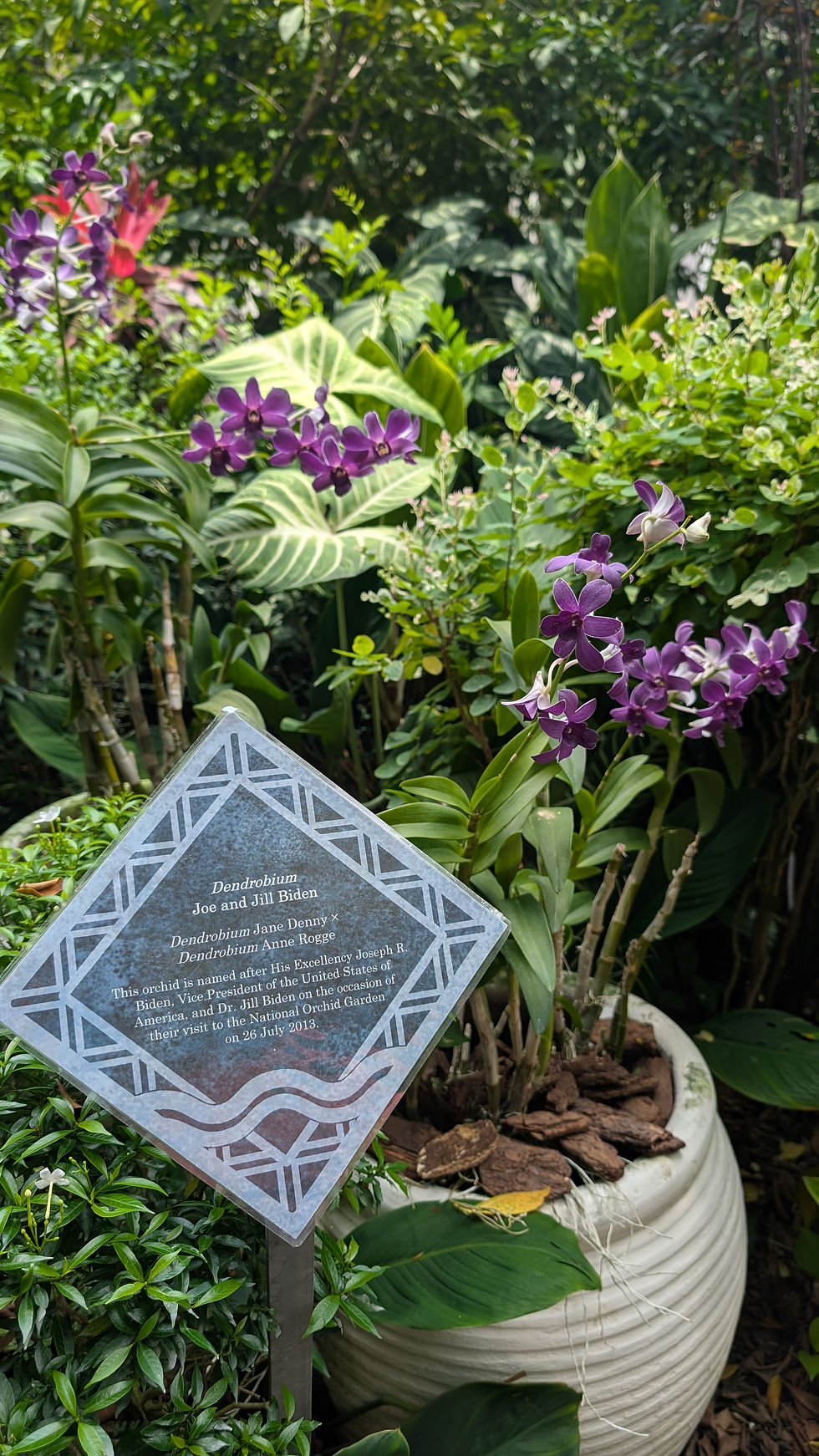
The most unethical thing I did to save $12 was ask for the student price at the National Orchid Garden. I’m a student of life, and I believe that counts. I'd do it all again to see the official orchid named after Joe Biden.
Meeting the City
By now, I’m no stranger to taking myself on self-guided free city walking tours. What makes mine extra special is that I do nearly zero research on where I’m going; I like the knowledge to be a surprise when I get there. Luckily, my second talent is my ability to tag along on actual city tours when I see them and overhear every snippet of information I can get.
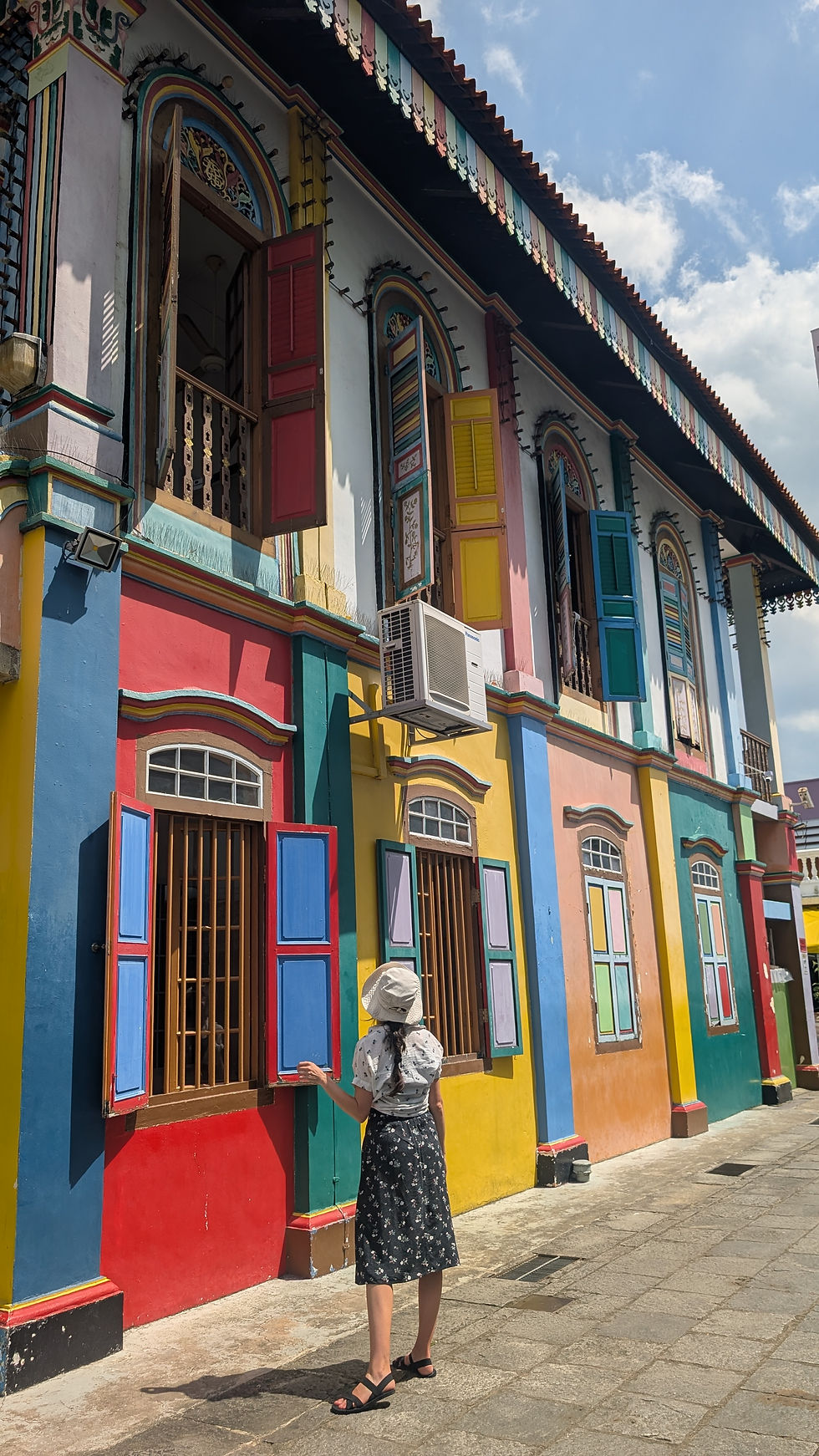
On these tours, I learned that Singapore has a lot in common with Malaysia. It’s a diverse melting pot of Chinese, Indian, Arab, Malay, and Singaporean communities that ride the line between retaining their heritage and integrating into a complex, shared identity. The biggest attractions include walking through Chinatown, Little India, and (more unique to Singapore) Arab Street. You can spend days taking in the world-class street art and architecture, including the National Mosque.

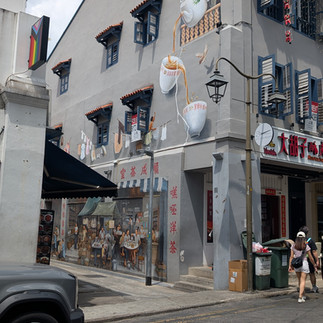

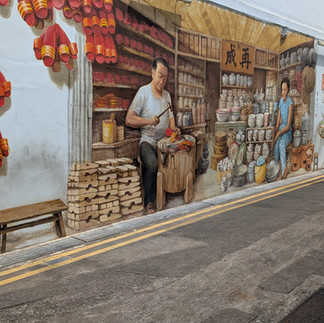

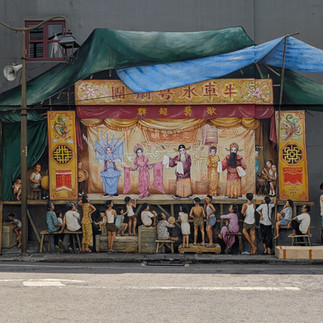

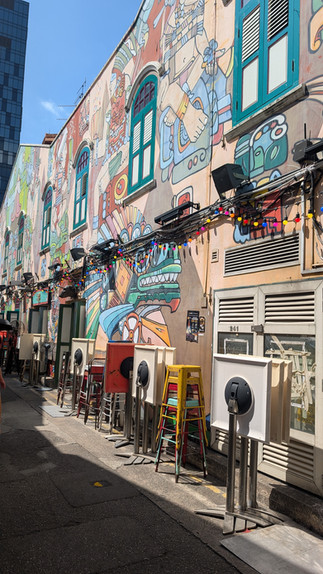

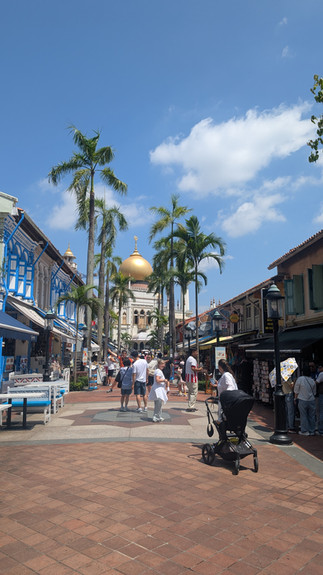

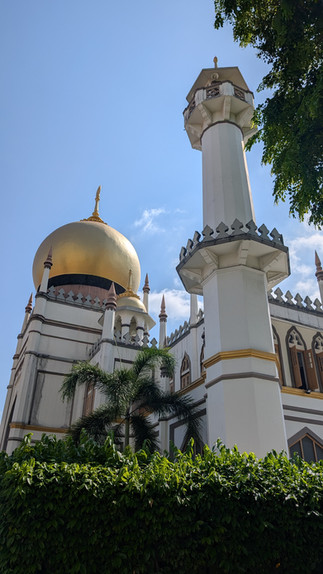
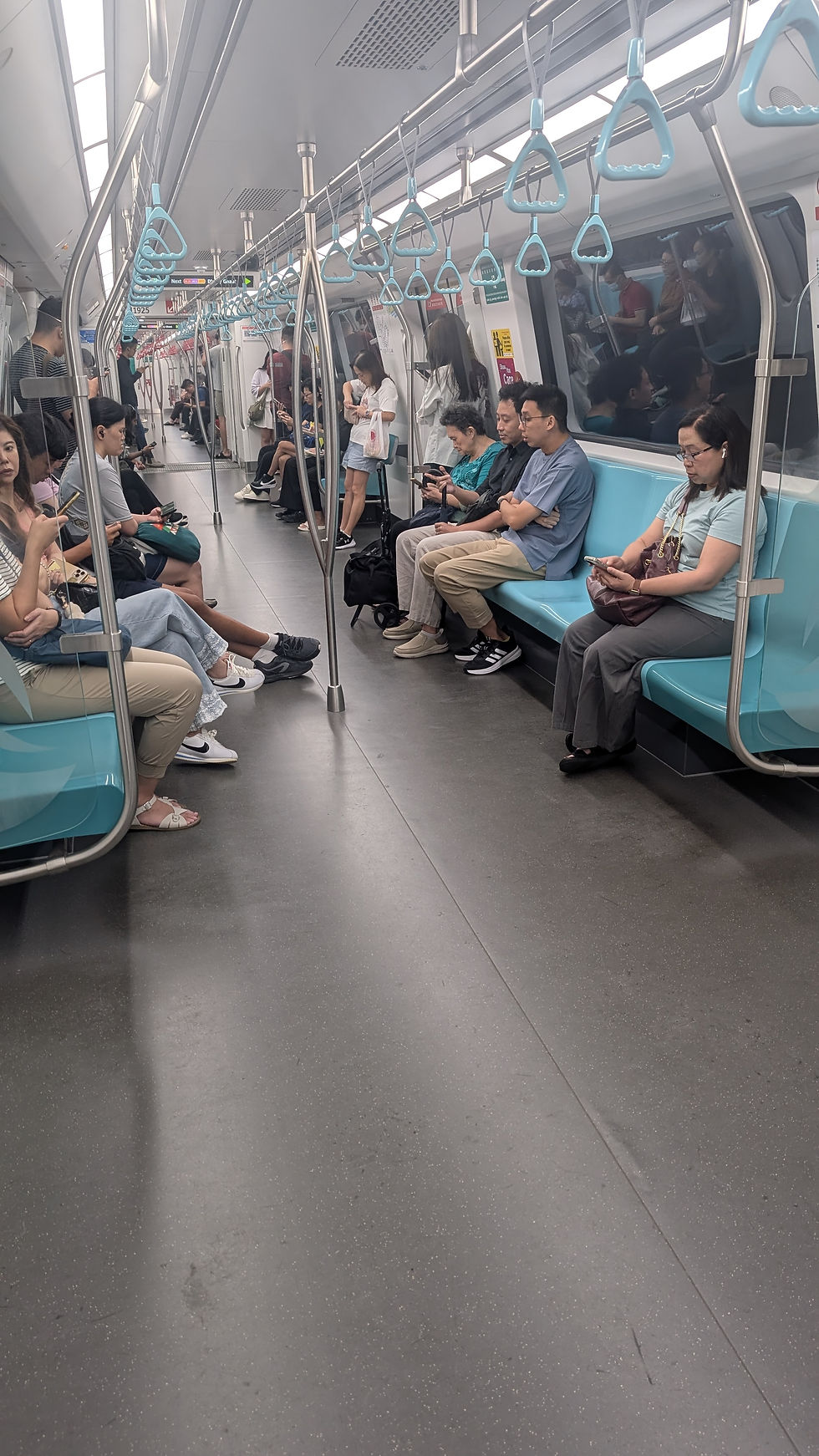
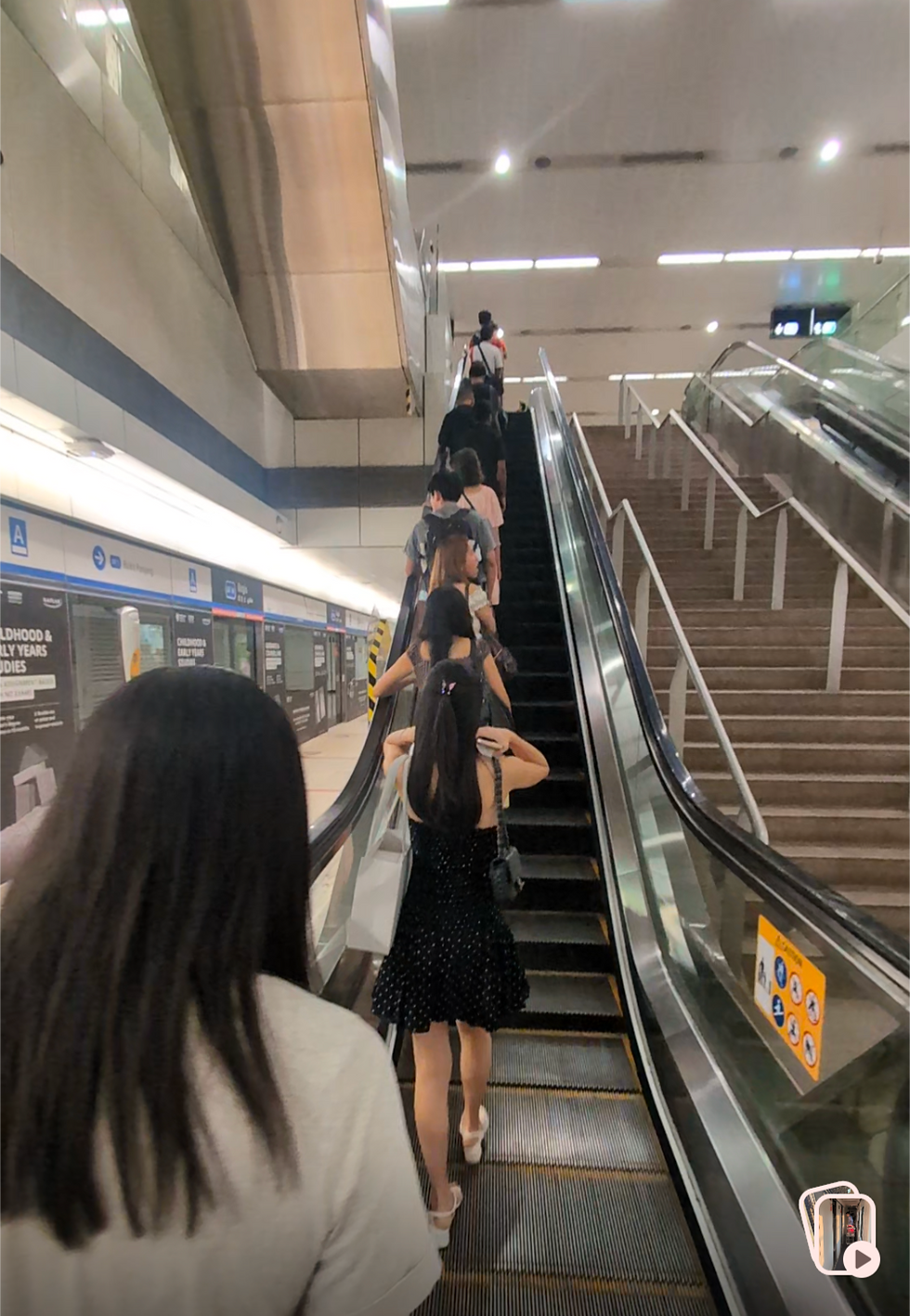
But Singapore carries its own unique heritage and history. As a tourist, you can feel the difference in culture in its sense of order. You'll first notice that public transportation is spotless; if my favorite noodles fell on the metro floor, I'd still think about eating them. (Except my favorite noodles wouldn't fall on the metro floor, because nobody eats on the metro here.)
Of all the things that put Singapore in a league of its own, none speaks more loudly than how it handles housing. Actually, it's not just in a league of its own — it’s leagues ahead of the rest of the world, and it’s my favorite discovery to date.
The Housing Program to Inspire All Housing Programs
When you visit an expensive city, there are a few things you think are a given, like high housing costs and high homelessness rates.
That’s not the case in Singapore.
In 2025, Singapore reported about 500 “rough sleepers.” In Austin alone, the estimated count of people experiencing homelessness was over 3,000. Compared to just about any major city, Singapore seems to hold the key to keeping people housed.
So we have to ask: what is Singapore doing right?
The answer is something that carries a rough reputation in the States: public housing.
In Singapore, public housing isn’t just for those struggling financially; it’s for everyone. 80% of residents live in public housing, and almost all of them (over 90%) own their homes. The government provides plenty of assistance to make this possible, like offering fair loans and equity opportunities throughout a person’s lifetime (not just for first-time buyers). They even subsidize housing costs for lower earners to keep rent as affordable as possible.
I spent a day exploring Singapore’s Housing & Development Board (HDB) and even toured model homes to learn the inner workings. I don’t normally condone fast-formed beliefs, but it took one day to convince me that every city planner in the world needs to study in Singapore.
I have a novel of notes from the day, but it really boils down to this:
Housing is seen as a holistic issue and not a single-issue policy puzzle. Family crises, mental health issues, addiction, and a field of other reasons can keep someone from a secure home. Singapore's housing organizations focus on addressing the factors that contribute to homelessness to prevent it in the first place.
For example, when designing communities, the HDB doesn't just consult housing specialists. They work with experts who advocate for every aspect of community. Environmentalists, sustainability experts, landscape architects, interior designers, health specialists, social workers, and more work together to design holistic neighborhoods where physical, mental, social, and emotional well-being all have a seat at the table.
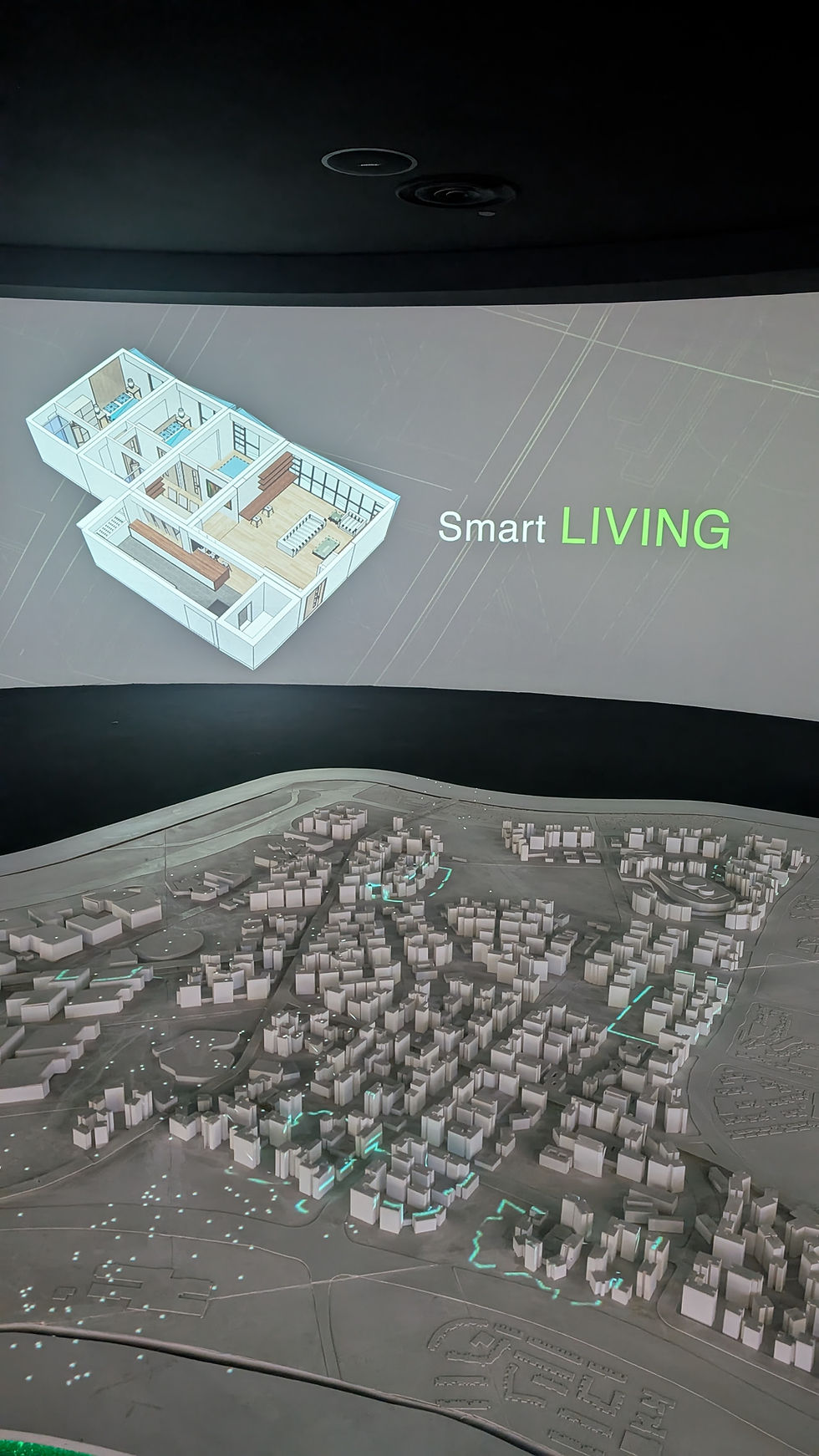
Neighborhoods are designed to be “car-lite,” and a top priority is building trails and public transportation that make the city as connected as possible.
It's even experimenting with car-free town centers where cars drive underground. Highways are replaced by parks, nature, and forest trails for walking and biking. As far as city planning is concerned, Singapore is the present, a pedestrian's paradise, and the rest of us are stuck in the past on I-35.
Not Just the House, but the Whole
On my last night in the city, I took a walk around my neighborhood to experience community design for myself. It happened to be Hari Raya, the celebration that marks the end of Ramadan. Muslims across the country cook, bake, and travel to spend time with family and friends. During these two days, many markets, businesses, and mosques across the city were closed. I walked through my neighborhood searching for a cheap and open food stand for dinner, and the scene I found encapsulated the entire trip.
I saw a large apartment building directly connected to a shopping mall with restaurants, a pharmacy, and groceries under one roof. In the center was a courtyard with trees and green space where families gathered, listening to live music and sharing dinner at dusk. A metro train rolled in behind them to the station that opens into the mall. On the periphery, walking and bike paths stemmed from the complex that led to the neighborhood's other apartments.
I watched these families for several minutes as the sun set before heading back to my bunk bed on a lit-up walking path that connected right to the door.
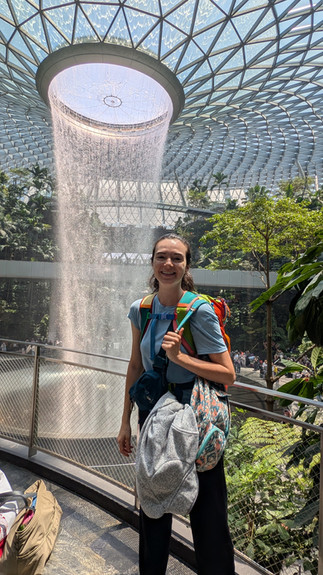
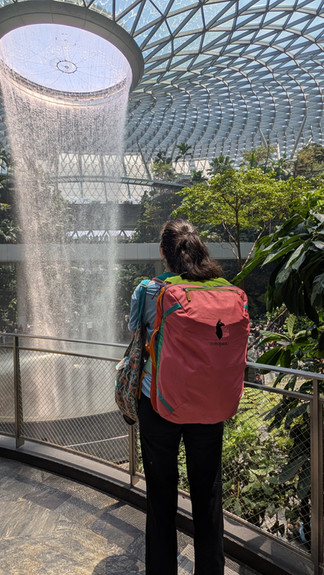
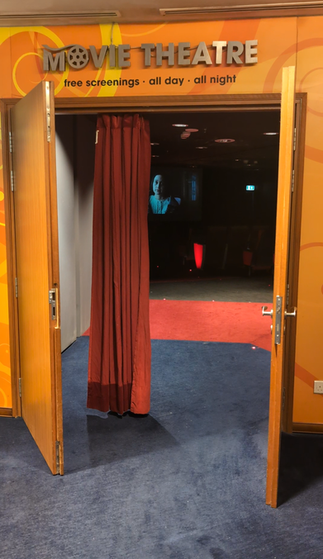
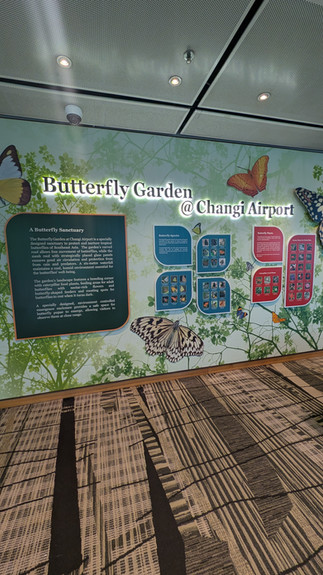
After 5 days, my budget for Singaporean noodles hit $0. I packed my bag and headed for the airport (which, of course, is no ordinary airport. It's a must-see tourist attraction in itself.) There's a butterfly garden, rock climbing walls, a 24-hour movie theater, kinetic art sculptures, and the highlight, a 40-meter-tall rain vortex called the Jewel in a 10-story shopping mall.




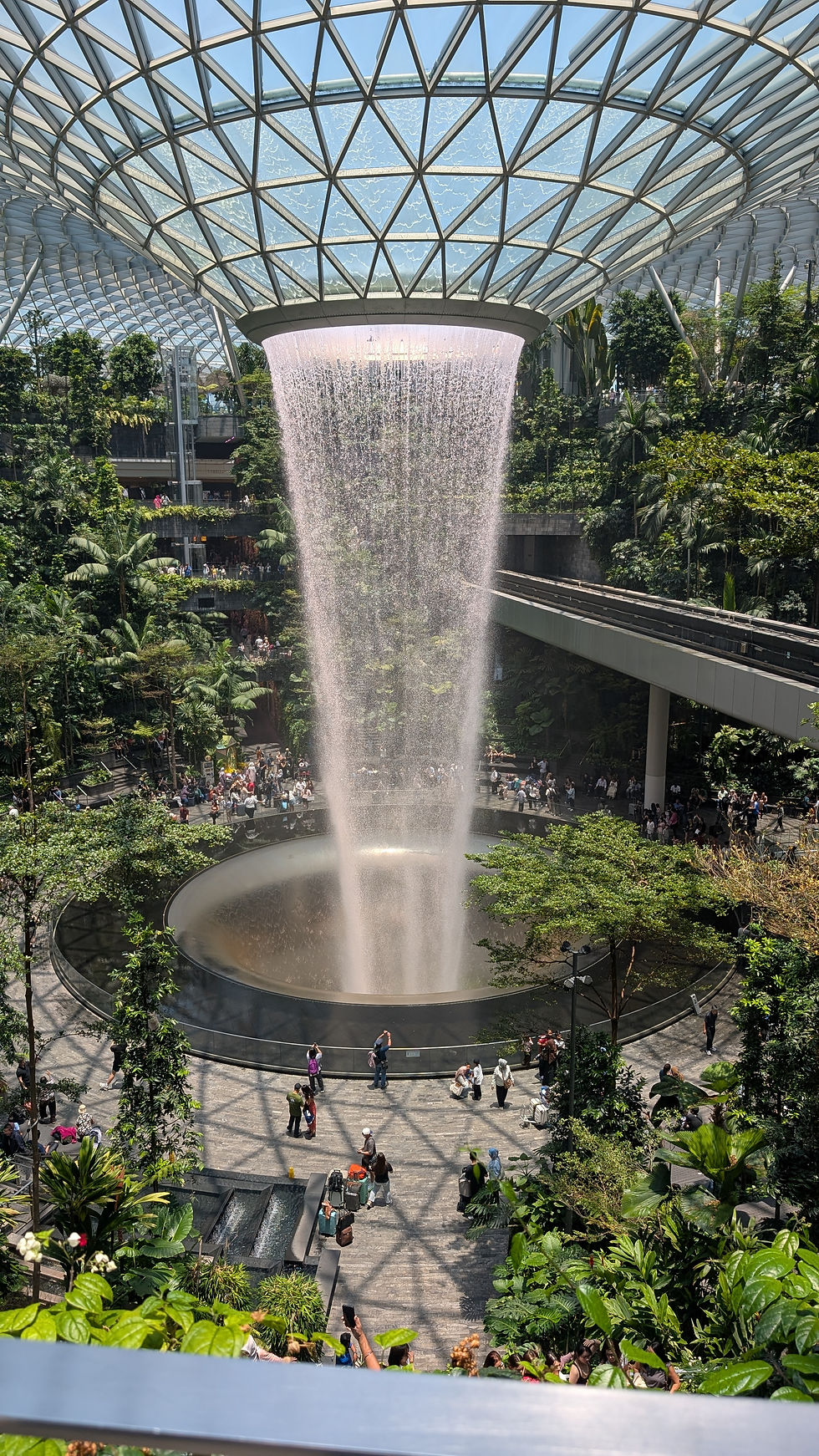
One day when my bank account is bigger, I'll come back and visit the zoo, see Cloud Forest, and watch what these maximizers have thought of next.
In the meantime, dare we hope we can borrow two things from Singapore: street noodles that slap and the determination to work toward a future where everyone has a place to call home.
Love,
Megan
If you'd like to get an email when new posts are live, sign up on the home page!


Comments